By Anonymous
On December 5, ICE agents carried out multi-agency raids on Taco Giro, a popular local chain of taquerias throughout Southern Arizona, seizing documents and kidnapping forty-six people. In response to one ongoing raid at a location in Tucson, community members gathered to witness, disrupt, and impede the kidnapping of their neighbors. The following reportback was submitted anonymously to Living & Fighting.
I was working at a coffeeshop when the message came in that ICE was raiding the Taco Giro location at St. Mary’s and Grande on Tucson’s historically Mexican Westside. Observers were calling for anyone available to gather and witness. I gulped down the rest of my watery, lukewarm coffee, packed my bag, and jumped on my bike.
For weeks we’d been chasing ICE sightings all over town. Like a demonic game of whack-a-mole, we’d usually get there after the operation was already completed and agents had left, kidnapped neighbors in tow, or we’d show up and it would turn out to be a drug bust rather than immigration enforcement. Once, in a neighborhood of Tucson that's part of the Pascua Yaqui Nation, I showed up and a lot of other people did too, but ICE and other federal agents were spread out, covering the little barrio with dozens of unmarked vehicles and making it hard to converge. Other times a handful of people would show up while the operation was still ongoing, but they would struggle to decide whether the incident warranted a clear, widespread call for a community response.
This was different. I got a call from a friend already on site reporting that as many as a dozen ICE vehicles had trapped themselves in the parking lot of the taqueria surrounded by a five-foot block wall with only one way in and one way out. This was our chance. When I arrived, the crowd had increased in size, but the basic facts remained the same: the west-facing side of the parking lot had two car-sized openings, immediately side-by-side, both closed off with gates. Agents conducting the raid had made the tactical decision to pack all their vehicles into the small parking lot and, apparently, pull the gates closed behind them to secure the scene. Crowds amassed in front of each of these gates, immediately gaining the tactical upper hand. The agents were trapped and, by the looks of it, they knew it.
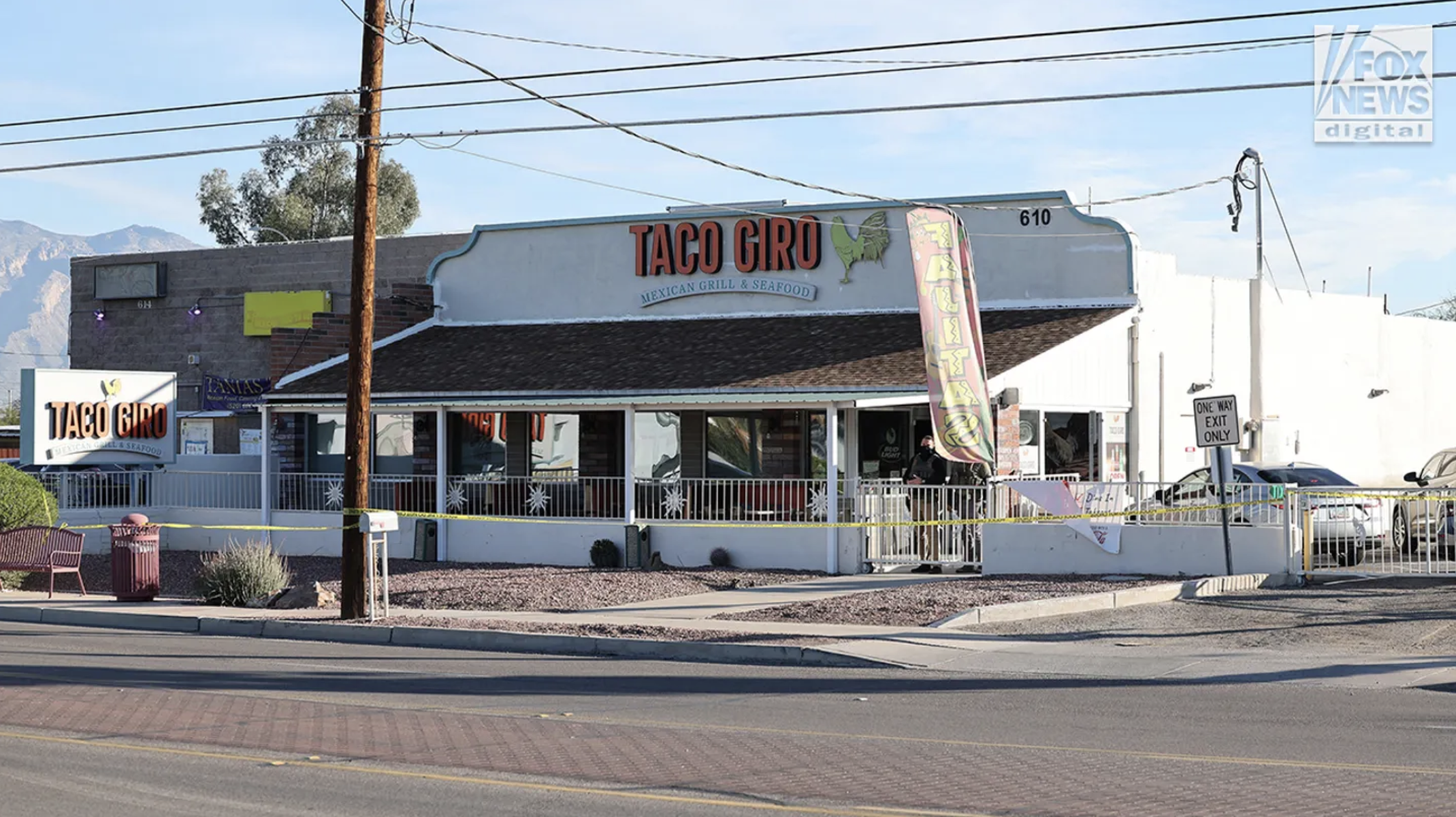
As we gathered and chanted, agents carried cardboard boxes of evidence out of the restaurant and loaded them into their vehicles. We couldn’t tell if they had workers detained inside their vehicles or not. The agents observed the crowd, made phone calls, and moved their cars aimlessly around the parking lot. While they hesitated our numbers grew.
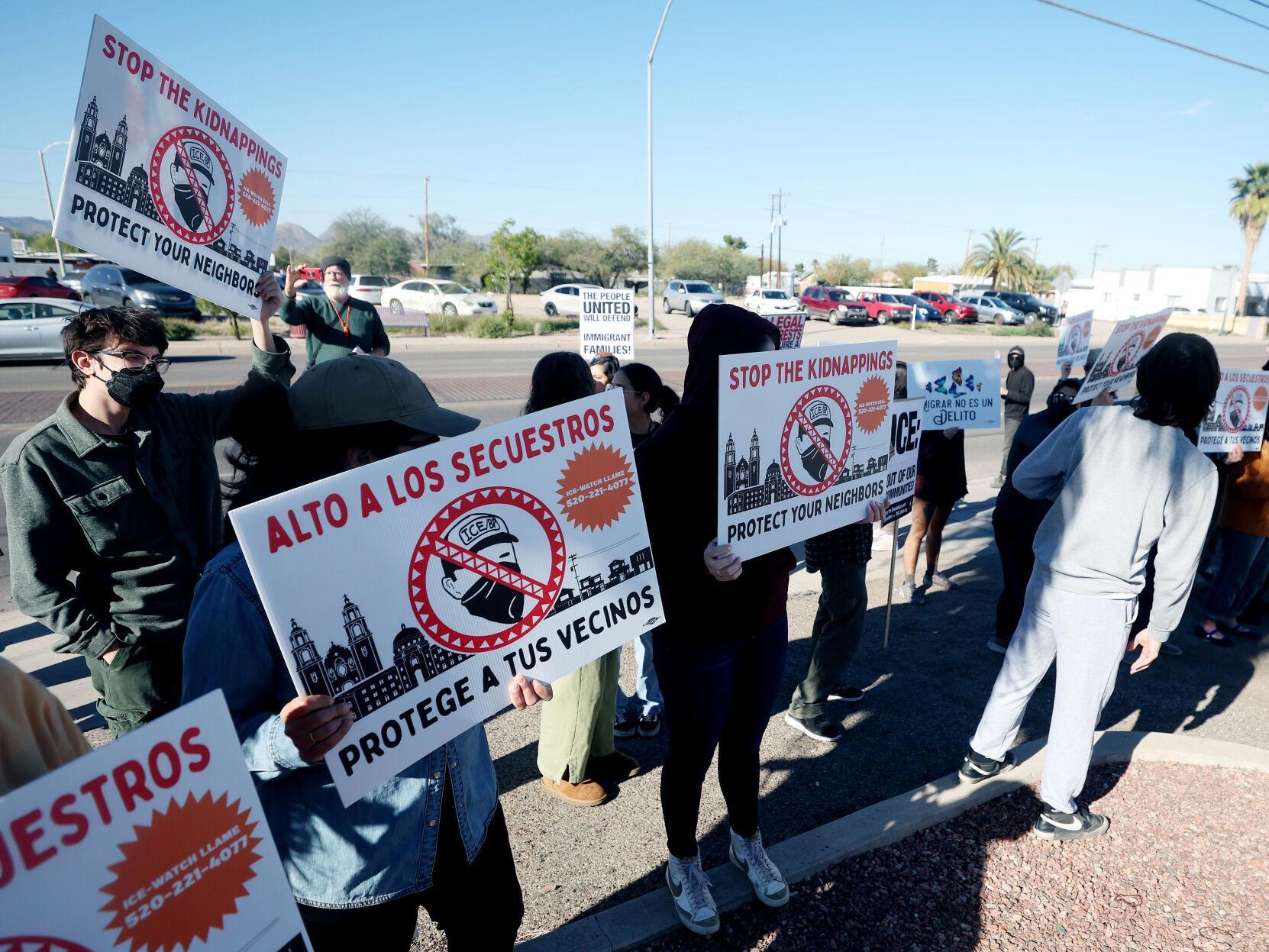
People amassed along Grande Ave, hailing passing traffic and alerting those in the vehicles to the fact that invading federal agents were kidnapping their neighbors at that moment and inviting them to join the protest. Some of us chanted, others blew whistles. When the ICE agent who seemed to be in charge came to tell the crowd to disperse, he was met with a cacophony of voices demanding he show us whether the cars in the lot contained people they were disappearing from the neighborhood and, if so, release them immediately. He gave up quickly and walked away. Over the next twenty minutes or so, our numbers continued to grow and journalists joined on the scene, doing interviews and broadcasting from the sidewalk. It was becoming a major spectacle and by now, all passersby slowed down, most honked, some pulled over to join. The empty dirt lot across the street was filling with cars.
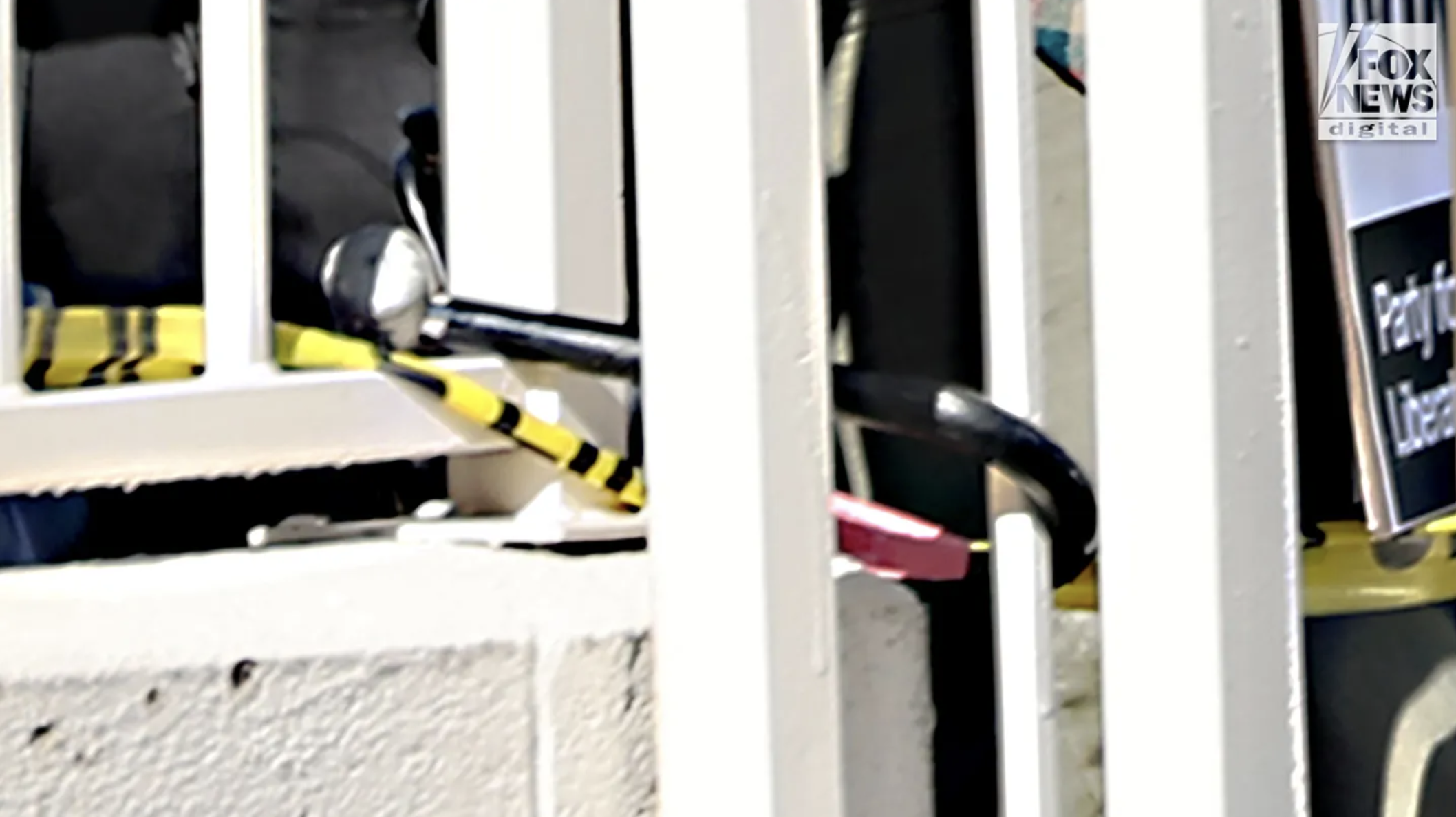
When it seemed like not much was changing and a stalemate had emerged, I took a short walk around the alley to see if more agents were amassed elsewhere. I didn’t see any. When I got back, a friend pulled me aside and pointed out that people had emerged from the crowd and affixed bike locks to both closed gates, locking them in place. Even if the agents were able to clear the crowd somehow, they were locked in. They’d have to get an angle grinder or bolt cutter to get through the locks.
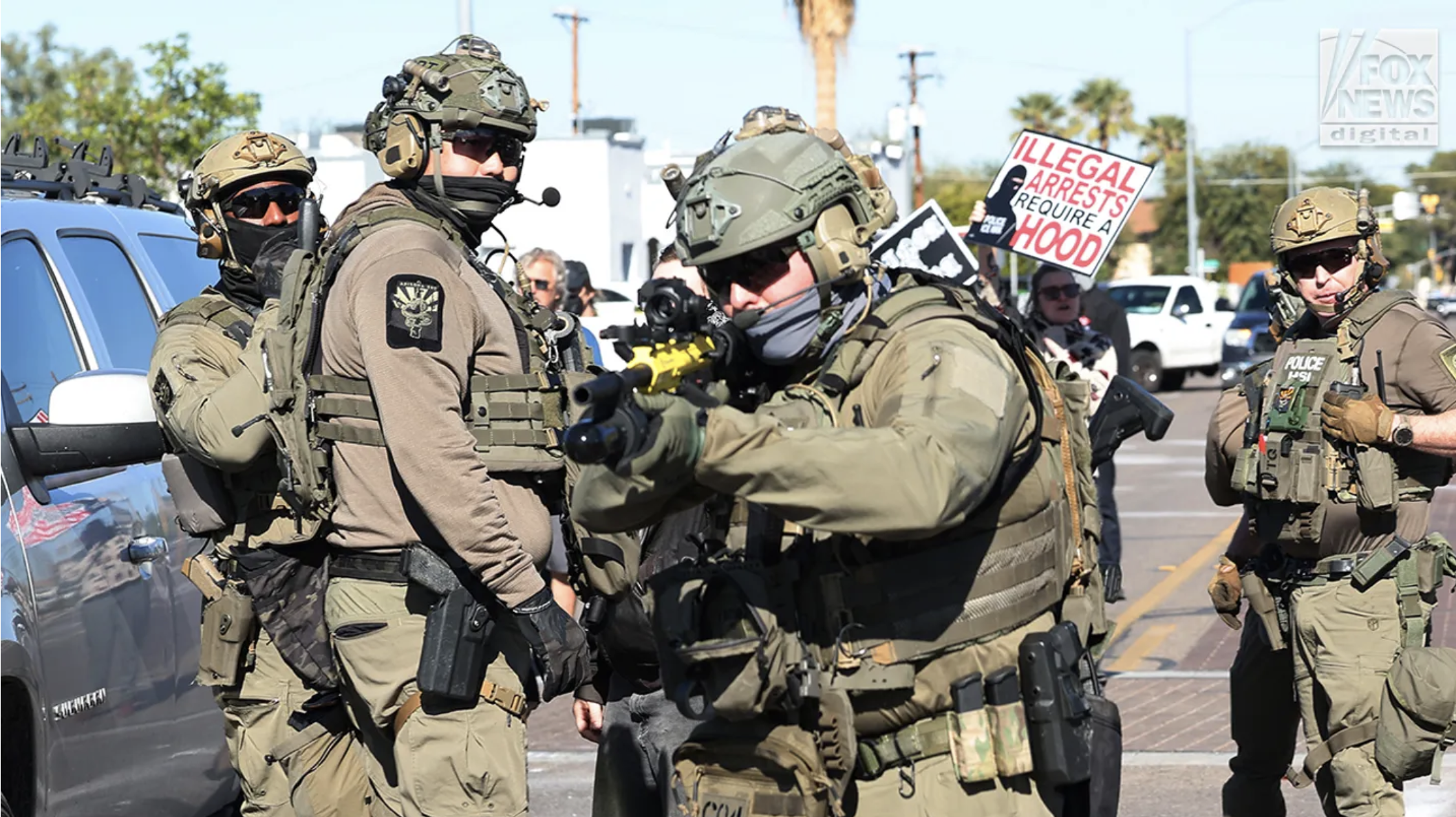
We watched as a line of unmarked vehicles, with a dark Sprinter van in front, approached northbound up St. Mary’s and stopped just south of the restaurant. Federal agents, who we later determined to be from the Homeland Security Investigations (HSI) Special Response Team (SRT) (ICE's version of a SWAT team) piled out of the van in full riot gear. Immediately, before the last of their team members had deployed from the van, agents threw an enormous can of tear gas and its toxic plumes were filling the air. Protesters started to run.
Within moments, someone in a black hoodie ran toward the canister and picked it up. The SRT riot goons hollered and charged, “don’t touch that!” running to try to snatch the combatant who pitched the canister sidearm back into the line of agents and away from the crowd. The figure in the black hoodie pivoted quick, slipped, fell, and scrambled back up, running away from the officers who pursued for a moment before falling back.
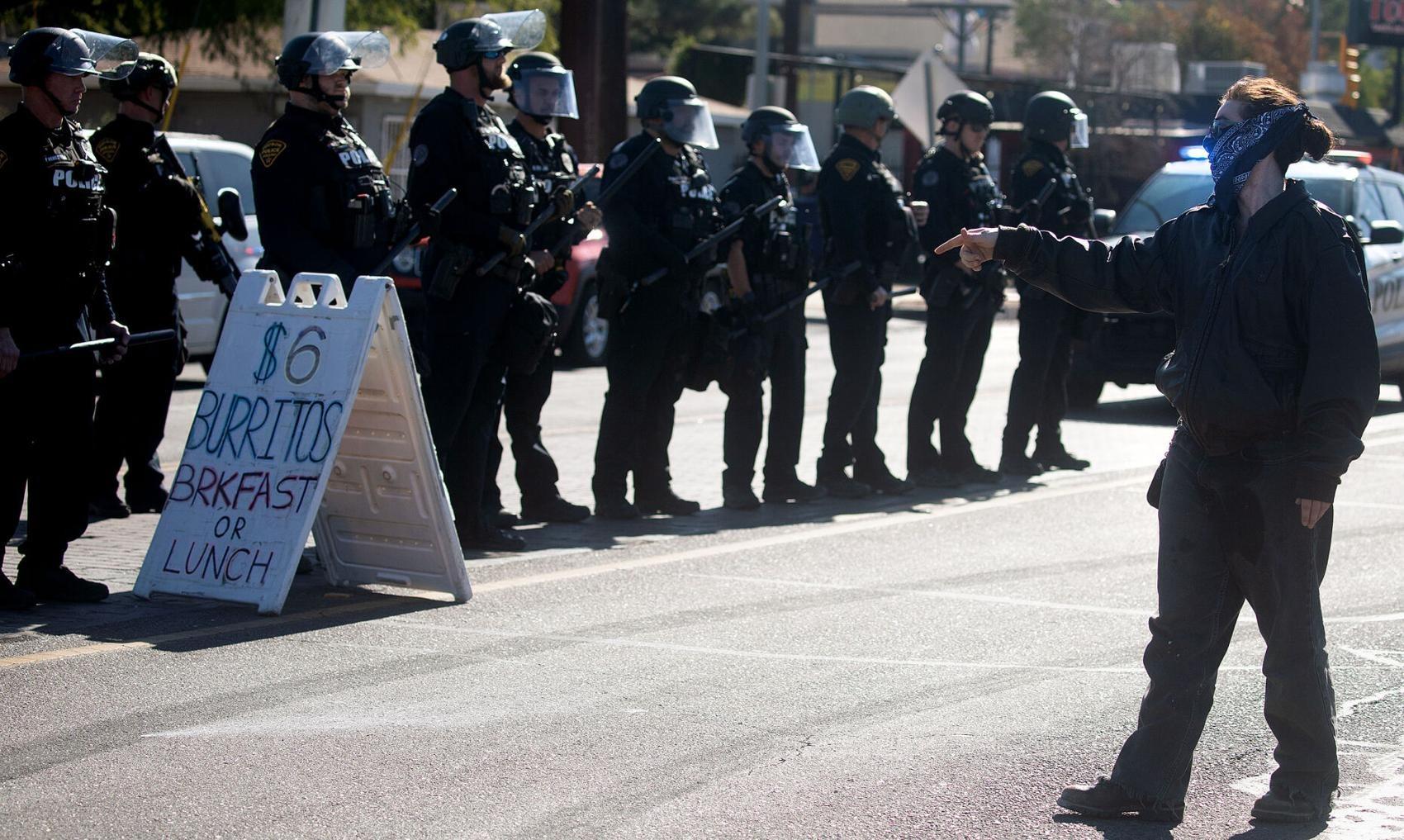
When the tear gas was deployed, the crowed fanned out into the street, stretching our lines across the wide boulevard and shutting down traffic in both directions. We fell back temporarily as the riot squad formed a sloppy line and walked at us, one agent spraying the ground at our feet with pepper balls. Back at the restaurant, behind the line of SRT agents, the ICE agents stuck in the parking lot were discovering that the gates in front of the restaurant had been locked and were scrambling through their trunks for the equipment needed to remove them. After a short period of confusion, the trapped agents got through the locks and, utilizing the space opened up by the riot squad, began fleeing the scene, flashing the lights of their unmarked cars.
After taking a moment to collect ourselves, the crowd regained its courage and started to approach the agents and follow them as they fell back toward their vehicles. One protester danced as the agent fired pepper balls at their feet, others grabbed plastic signs to use as shields to protect their face and body from the projectiles. Eventually, the crowd flanked the officers who moved erratically and without discipline, seemingly untrained in crowd control tactics. SWAT formations and movements calibrated for raiding homes and businesses don’t translate well to facing off with a crowd in the streets, and we quickly pulled their card, surrounding them and preventing their vehicles from leaving. Someone approached one of the unmarked ICE vehicles stuck in the middle of the crowd and kicked out its tail light, the broken pieces of plastic skidded past the agents’ feet. Someone else crawled up and slashed the back tire of their Sprinter van in the confusion.
Somewhere in the melee Congresswoman Adelita Grijalva and her assistants were performing melodrama for the cameras.
The SRT agents targeted someone in the crowd, chasing them down, tackling them hard and arresting them. In the process, they trampled and then arrested someone else as well. We later found out they alleged they’d grabbed the person who kicked out the tail lights. The agents shoved the two they’d captured into their Sprinter van and piled in after them. As the van pulled off, rocks and bottles bounced off its side.
It was only in this final sequence of events that the local Tucson police made an appearance. Up until the arrests, TPD had been uninvolved in the entire affair. A few vehicles were reportedly staged out of sight a few blocks away but otherwise, it seemed that TPD hoped to maintain its thin veneer of “progressive policing” through nominal non-collaboration with ICE. However, while the SRT agents were able to push the crowd back enough to let the agents trapped in the parking lot leave, they were now stuck themselves. Surrounded by a combative crowd that they had neither the training, skill, nor willpower to competently fight, we learned from local news coverage afterwards that the SRT agents “requested emergency support” from TPD. So, almost immediately following the second arrest, police cruisers rushed into the area. Officers then formed skirmish lines between the crowd and the trapped SRT agents. Eventually, enough space was created through which the agents could leave under the crowd’s rock- and-bottle-laden kiss goodbye. With the agents gone, the crowd soon dispersed without incident after a brief stand-off with TPD.
Later that day, people gathered at the ICE field office at Campbell and Valencia, site of the June 11, 2025 protest that resulted in a crowd beating back a crew of security guards and causing thousands of dollars in property damage to the ICE facility. This time, about 30 people gathered at the field office and attempted to document and jeer at the agents as they returned. This office is often where detainees are taken for initial processing before being taken to a detention center. This demonstrated a promising impulse, one that might do well to be replicated in the future. After a couple mild confrontations and some pepper spray, demonstrators decided together to leave when it seemed like no others were coming rather than stick around too long in vulnerable numbers. Later that night, the Party for Socialism and Liberation put out a call for a street protest that wove its way through downtown, drawing around 200 people. The next day, people called for a community assembly to get organized and be more ready for ICE next time, which also drew between 200-250 participants with only a day's notice.
In almost every way, the intervention in front of the Taco Giro was a major success. Community members showed up quickly in large numbers, noticed the tactical error ICE agents made in boxing themselves into the parking lot, and immediately took steps to exploit the situation to their benefit—first by amassing in front of the only exits and then by locking the gates shut with sturdy u-locks. When approached by ICE officers seeking to negotiate and then commanding them to disperse, the crowd responded with shouts and jeers, refusing all negotiation with an unjust, invading force in their community. When the SRT agents rolled in and immediately deployed tear gas, the crowd didn’t hesitate to return the canister to them and refused to back down from the pepper balls. Tear gas and pepper spray only hurt for a minute but are ultimately nothing to be afraid of. While some people fell back when the tear gas and pepper spray came out, a sizable portion of the crowd seemed to know what they were dealing with and continued undeterred.
Beginning in Los Angeles in the summer of 2025 and then spreading across the country, the tactical repertoire for responding to an uptick in ICE invasions into our communities is clear: when ICE is kidnapping people, show up. Witness, interfere, and escalate. Prevent ICE vehicles from leaving the scene with our community members, fight them if you can, slash their tires, link arms in front of their vehicles, support the families and community members impacted by the traumatic kidnapping. Track ICE movements and harass them wherever they go: bars, hotels, restaurants, grocery stores, gas stations. Don’t let them have a moment of peace.
This method of intervention has several concrete outcomes, including showing tangible solidarity to people targeted by state violence, making ICE operations more difficult and therefore expensive and time-consuming, spreading the normality of noncompliance with unjust orders from law enforcement, and turning an otherwise quotidian reality of life under an authoritarian regime into an event, set apart from the flow of daily existence. When a crowd forms, when teargas fills the streets, it makes the kidnappings impossible to ignore. Our neighbors, loved ones, and community members deserve for their disappearance to be met with forceful resistance. When in doubt, escalate.
Images: Mamta Popat, Arizona Daily Star; Derek Shook, Fox News